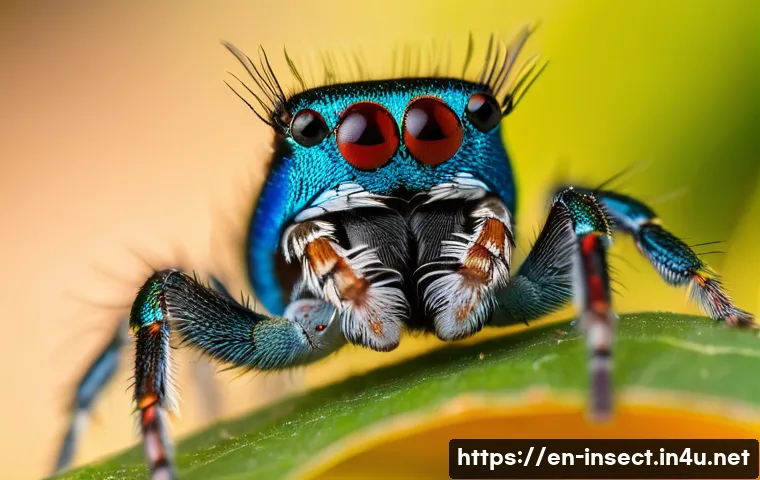
You know, there’s just something inherently captivating about insects. We often see them as tiny, buzzing nuisances or fleeting specks in our peripheral vision, but if you really stop to look, their world is absolutely brimming with incredible stories.
I’ve always been fascinated by how these seemingly small creatures have woven themselves into the fabric of human legend, science, and even our everyday idioms.
From the industrious ant inspiring tales of perseverance to the delicate butterfly whose mere wing flap can, theoretically, alter distant weather patterns – seriously, the “butterfly effect” isn’t just a cool movie title!
It’s amazing how a little bug can hold such profound lessons or spark such epic narratives. I mean, who hasn’t been utterly mesmerized watching a tiny spider meticulously weave its incredibly strong web, or felt a shiver down their spine hearing the ancient, rhythmic hum of cicadas during a hot summer?
These aren’t just biological facts; they’re moments of wonder and wisdom that have shaped our understanding of the world around us. Let’s peel back the layers and uncover some of the most famous, and often surprising, insect anecdotes that truly show us what these miniature marvels are all about.
We’ll get to the bottom of it and learn something truly fascinating.
Nature’s Original Engineers: Unpacking the World of Tiny Innovators
The Art of Adaptation: Surviving Against All Odds
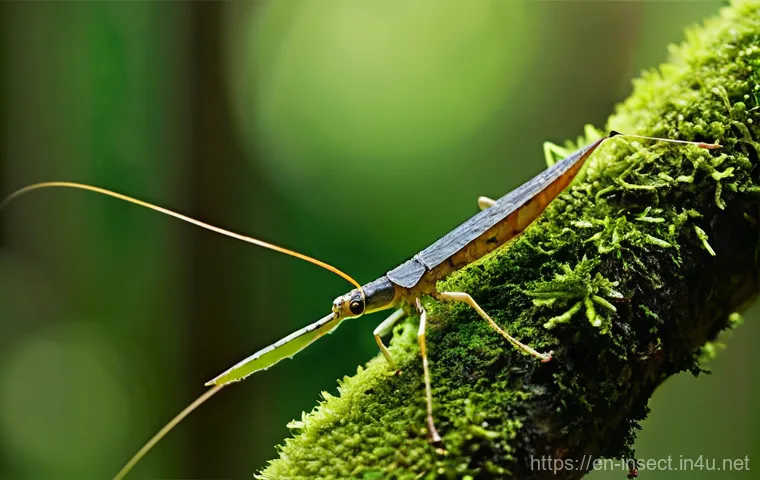
When you really think about it, insects are the ultimate survivors. They’ve been around for millions of years, outliving dinosaurs and adapting to practically every environment imaginable, from scorching deserts to frozen tundras. It always strikes me how effortlessly they blend into their surroundings or evolve defenses that are just mind-bogglingly effective. Take the stick insect, for example – I once spent a good five minutes staring at a branch in my backyard, utterly convinced it was just part of the tree, only for it to suddenly scuttle away. Talk about a master of disguise! Their ability to mimic leaves, twigs, or even bird droppings is a testament to the incredible power of natural selection. It’s not just about looking like something else, though. Some insects, like the bombardier beetle, have evolved chemical defenses that are truly explosive, literally spraying boiling hot, toxic chemicals at predators. Imagine the evolutionary journey that led to such a complex biological weapon! These aren’t just random occurrences; they’re intricate dance moves in the grand ballet of survival, showcasing millions of years of trial, error, and magnificent success. It makes you wonder what else we’re missing, right?
Unlocking Nature’s Chemical Secrets: Potent Potions and Clever Camouflage
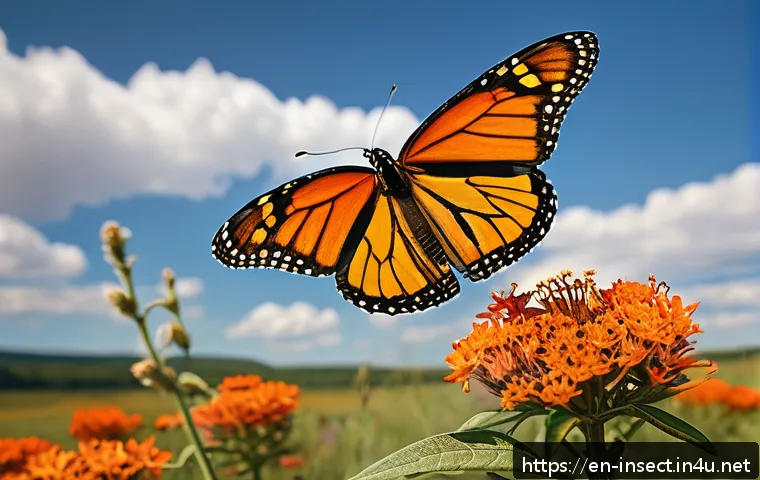
Beyond physical mimicry, insects are absolute geniuses when it comes to chemical warfare and communication. I’ve always been fascinated by the sheer variety of toxins, repellents, and pheromones they produce. Consider the monarch butterfly – it’s beautiful, yes, but it’s also pretty much inedible to most birds thanks to the milkweed it eats as a caterpillar. That bright orange serves as a universal ‘don’t eat me’ sign, a brilliant piece of biological advertising. Then there are the ants, using complex chemical trails to navigate, recruit nestmates, and even declare war. It’s like a miniature, organic internet, constantly sending out signals. I remember seeing a line of ants carrying crumbs to their nest, and it wasn’t just a random march; it was a perfectly orchestrated logistical operation guided by invisible chemical messages. And let’s not forget the fireflies, using bioluminescence as a dazzling, species-specific mating call. Each flash pattern is a secret code, a tiny light show across the summer night, all to say, “Hey, I’m here!” These chemical interactions are a hidden language, constantly being spoken around us, influencing everything from reproduction to defense, and it’s truly a marvel to witness, or at least to know about.
The Underrated Workforce: How Insects Keep Our World Humming
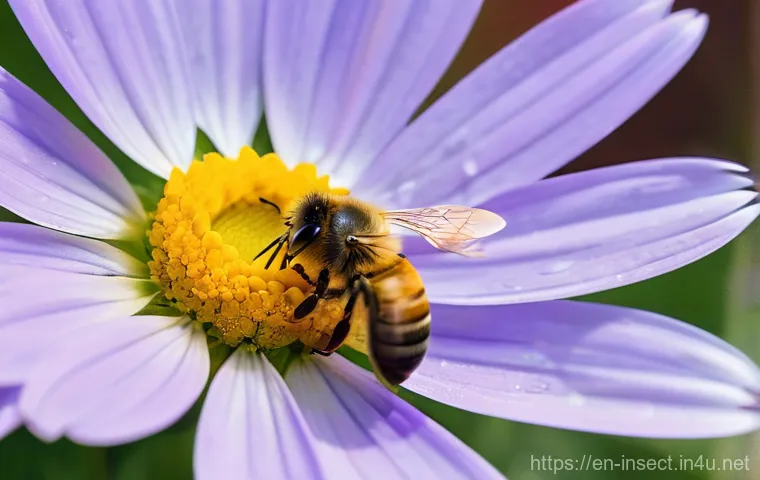
Honestly, if insects ever went on strike, we’d be in serious trouble. We often overlook their crucial roles, but they are the unsung heroes maintaining the ecological balance that allows us to thrive. I mean, where would we be without pollinators? As someone who loves a good summer garden, I’ve seen firsthand the diligent work of bees and butterflies flitting from flower to flower. It’s not just about pretty flowers, though; a huge chunk of our food supply, from apples to almonds, depends entirely on their industrious efforts. It’s mind-boggling to think that these tiny creatures are responsible for billions of dollars in agricultural production globally. Beyond pollination, consider the decomposers – beetles, flies, and other creepy crawlies that break down organic matter, returning vital nutrients to the soil. Without them, our world would be buried under a mountain of dead leaves and decaying organisms, and the nutrient cycle would grind to a halt. It’s a messy job, but someone has to do it, and these small laborers do it tirelessly and efficiently. Their impact is so vast and fundamental that it makes you appreciate every buzzing, crawling creature, doesn’t it?
The Silent Sentinels: Indicators of Environmental Health
It’s not just their direct services; insects also serve as incredibly valuable environmental indicators. I’ve learned that observing insect populations can tell us a lot about the health of an ecosystem. For instance, the presence of certain aquatic insect larvae can signal clean water, while their absence or the dominance of pollution-tolerant species can point to serious issues. It’s like they’re the canaries in the coal mine, giving us early warnings about changes in air quality, water purity, and habitat degradation. I remember a local conservation group monitoring bee populations, and their findings directly correlated with pesticide use in the area. It wasn’t just scientific data; it was a stark reminder that what we do in our backyards has ripple effects far beyond. They are biological sensors, silently collecting and broadcasting data on the state of our planet. Paying attention to these tiny messengers is crucial because they’re not just telling us about their world; they’re telling us about ours too. It’s a wake-up call, often delivered by something no bigger than your thumbnail.
Beyond the Buzz: Remarkable Behaviors That Mimic Our Own Lives

When you really delve into the insect world, you start seeing parallels with our own lives that are just uncanny. They have complex social structures, communication systems, and even forms of “agriculture” that make you question just how unique human intelligence really is. Take leaf-cutter ants, for instance. I’ve seen documentaries about them, and it’s incredible; they don’t eat the leaves they cut. Instead, they chew them up and use them to grow a special fungus in their nests, which is their actual food source. It’s a sophisticated farming operation, complete with waste disposal and pest control, all managed by creatures smaller than your pinky nail. This organized behavior, division of labor, and resource management are fascinating. And what about the intricate dances of honeybees, communicating the location of nectar sources with incredible precision? It’s a tiny, elegant language of movement, a biological GPS system. These aren’t just instinctual acts; they showcase a level of cooperation and problem-solving that genuinely inspires. It truly makes you reconsider the limits of what a “simple” organism can achieve.
Masterful Builders: From Intricate Nests to Elaborate Traps
I’ve always been astounded by the architectural prowess of insects. Their constructions aren’t just functional; they’re often incredibly intricate and purpose-built for survival, reproduction, or defense. Think about a termite mound in the African savanna – these aren’t just random piles of dirt. They are complex structures with sophisticated ventilation systems, temperature regulation, and specialized chambers for food, nurseries, and the queen. Some can be taller than a human! It’s like a natural skyscraper, engineered by millions of tiny workers. Then there are the more subtle, but equally ingenious, creations. The caddisfly larva, for example, builds a protective case around itself using pebbles, twigs, and silk, creating a personalized, portable fortress. And who could forget the spider’s web? An engineering marvel, strong yet flexible, designed to capture prey with sticky silk that’s stronger than steel by weight. Each strand is a testament to natural innovation, a perfect trap. These structures aren’t just shelters; they’re extensions of the insects themselves, showcasing an innate design intelligence that’s truly remarkable.
| Insect | Notable Behavior | Human Parallel/Lesson |
|---|---|---|
| Ants | Highly organized colonies, cooperative foraging, division of labor, chemical communication. | Teamwork, logistics, efficient resource management, complex social structures. |
| Honeybees | Waggle dance communication, pollination, hive construction, honey production. | Effective communication, vital ecological service, communal living, food storage. |
| Termites | Building intricate mounds with climate control, fungus farming. | Advanced architecture, sustainable agriculture, environmental engineering. |
| Leaf-cutter Ants | Cultivating fungus gardens for food, specialized roles. | Agriculture, symbiosis, specialized labor, ecosystem management. |
| Spiders | Weaving strong, intricate webs for catching prey. | Engineering, patience, precision, strategic hunting. |
The Ancient Whispers: Insects in Lore, Language, and Legacy
It’s clear that insects have captured our imaginations for millennia, permeating our myths, folklore, and everyday language in ways we often don’t even realize. From ancient Egyptian scarabs symbolizing rebirth and protection to the diligent ant in Aesop’s fables, teaching us about hard work and foresight, these tiny creatures have always held significant cultural weight. I often find myself using idioms like “busy as a bee” or talking about a “social butterfly,” and it’s a testament to how deeply ingrained insect characteristics are in our collective consciousness. Even the phrase “the bee’s knees” referring to something excellent, shows a charming, if slightly whimsical, appreciation for these pollinators. And then there are the less obvious, but equally profound, connections. The transformation of a caterpillar into a butterfly isn’t just a biological process; it’s a universal symbol of change, hope, and new beginnings. Many cultures, including my own, see butterflies as messengers of the spirit world or representations of the soul. These anecdotes aren’t just old stories; they’re living proof of how these small beings have shaped our understanding of the world, offering metaphors and wisdom that transcend time. It’s truly fascinating how a creature so small can carry such immense symbolic power.
Insect Inspired Art and Innovation: Beyond Biology
Beyond folklore and language, insects have directly inspired countless human innovations and artistic expressions. Architects and engineers, for example, have studied termite mounds to design more energy-efficient buildings, mimicking their natural ventilation systems. Scientists are even developing new materials based on the incredibly strong yet lightweight structures found in insect exoskeletons and spider silk. It’s a field called biomimicry, and it’s absolutely thrilling to see how nature’s designs are being adapted for our own technological advancements. Artists and designers, too, have long drawn inspiration from the vibrant colors of beetles, the delicate patterns on butterfly wings, and the intricate structures of their bodies. Just think of the stunning jewelry made with iridescent beetle wings or the elaborate patterns in textiles that echo insect forms. I’ve seen some incredible examples of designers creating clothing and furniture that subtly incorporate these natural motifs. It shows that the influence of insects isn’t just confined to the natural world; it extends into our creative endeavors, pushing the boundaries of what we can imagine and build. They truly are miniature muses, aren’t they?
The Future is Small: Embracing Our Tiny Co-Inhabitants
Honestly, the more I learn about insects, the more I realize how much we still have to discover and appreciate. They’re not just ‘bugs’ to be swatted away; they are integral parts of our ecosystems, sources of profound inspiration, and silent teachers of resilience, innovation, and cooperation. As our world changes, understanding and protecting these tiny co-inhabitants becomes more critical than ever. Climate change, habitat loss, and pesticide use are all taking a toll on insect populations globally, and that should be a major concern for all of us. Losing these species doesn’t just mean a less diverse world; it means losing vital pollinators, decomposers, and indicators of environmental health, potentially unraveling the very fabric of our ecosystems. So, next time you see an ant marching diligently across your patio or a butterfly gracefully fluttering through a meadow, take a moment. Observe, appreciate, and remember the incredible stories and invaluable lessons these tiny marvels hold. Their world, in all its complexity and beauty, truly reflects a larger wisdom that we humans are still learning to fully grasp. They really are incredible, aren’t they?
Frequently Asked Questions (FAQ) 📖
Q: How have insects, often seen as mere pests, actually inspired some of our most enduring cultural stories and even profound scientific concepts?
A: You know, it’s wild how often we overlook the profound impact these tiny beings have had on us. I mean, think about it: the industrious ant isn’t just a critter carrying crumbs; it’s a universal symbol of hard work and community.
Growing up, my grandma would always tell me stories about ants working together, and it really stuck with me – a powerful lesson wrapped in a tiny package.
Then there’s the whole “butterfly effect” idea. It’s not just a cool movie title; it’s a scientific concept born from the observation that a tiny change can lead to massive, unpredictable outcomes.
It completely reshaped how we think about chaos and interconnectedness. And let’s not forget the humble spider, whose intricate, impossibly strong webs have inspired engineers and artists for centuries.
I’ve spent countless summer evenings just watching them, utterly mesmerized by their architectural genius. These aren’t just biological facts; they’re deep cultural tapestries woven by the very creatures we often swat away.
It really makes you pause and appreciate the bigger picture, doesn’t it?
Q: Can you elaborate on the ‘butterfly effect’ and how a tiny insect could theoretically cause something so massive? It sounds like something out of a sci-fi novel!
A: Oh, it absolutely does sound like sci-fi, but that’s what makes it so fascinating! The “butterfly effect” isn’t about a literal butterfly flapping its wings and instantly causing a hurricane across the world.
Instead, it’s a concept from chaos theory, popularized by meteorologist Edward Lorenz. He was working with weather prediction models and found that incredibly small, almost imperceptible changes in initial conditions – like, say, the minuscule air disturbance from a butterfly’s wing flap – could, over time, compound and lead to vastly different, unpredictable outcomes in complex systems like the weather.
What I personally took away from learning about it is that everything is connected. It really highlights how sensitive our world is and how even the smallest action, or in this case, the smallest natural phenomenon, can set off a chain reaction.
It’s a powerful metaphor for life, isn’t it? It makes you think twice about your own “butterfly flaps” in the world and the ripple effects they might create.
Q: From your personal experience, what’s one observation of an insect that genuinely surprised you or taught you a memorable lesson?
A: This is one of my favorite questions! I remember one summer evening, I was sitting on my porch, just unwinding, and I noticed this tiny little ant struggling with a crumb that was probably ten times its size.
It pushed, it pulled, it tried every angle, failed a dozen times, but it just wouldn’t give up. Eventually, after what felt like an eternity, it managed to get that crumb moving.
I sat there, completely engrossed, for a good twenty minutes, maybe more. What struck me wasn’t just the sheer strength, but the incredible perseverance and problem-solving.
It was such a vivid, real-time example of “if at first you don’t succeed, try, try again.” It reminded me that even the smallest creatures possess an indomitable spirit.
It was a humble ant, but that night, it taught me more about resilience than any textbook ever could. It’s those little, unexpected moments that truly make you appreciate the world around you, isn’t it?