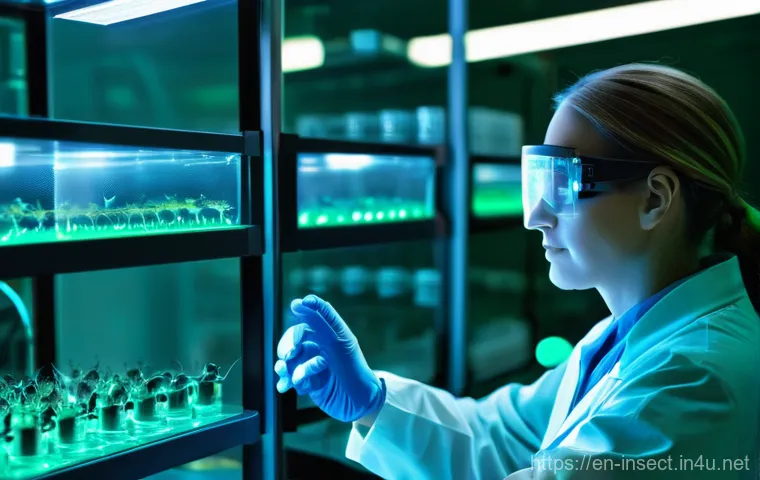
Genetically engineering insects, especially with tools like CRISPR-Cas9, is quickly becoming a game-changer in how we tackle some of our oldest problems, from battling relentless agricultural pests to curbing devastating insect-borne diseases like malaria and dengue fever.
It’s truly incredible to see how scientists are able to precisely edit insect genomes, either to make them sterile, resistant to diseases, or even to alter their behavior to protect our crops.
I remember first hearing about gene drives, and honestly, my mind was blown by the sheer potential of spreading beneficial genetic modifications throughout entire pest populations, rather than just hitting them with broad-spectrum chemicals.
This isn’t just some sci-fi fantasy anymore; it’s happening right now, with trials already underway, like using genetically engineered mosquitoes to reduce populations of disease-carrying insects in places like the Grand Cayman Islands and Brazil.
However, as exciting as these innovations are, they also spark a lot of important conversations and, let’s be real, a healthy dose of caution. When I talk to people about this, the questions that often pop up are about the unknown consequences – what if these new genes spread in unexpected ways, or what if eliminating one pest creates an ecological void that something even worse fills?
These are valid concerns, and it truly emphasizes the need for thorough environmental impact studies and careful regulatory guidelines, which are still very much in development.
It’s a delicate balance, isn’t it? Pushing the boundaries of science for the greater good, while ensuring we’re not inadvertently creating new challenges down the line.
It makes you wonder how these technologies will truly redefine our relationship with nature and agriculture in the coming years. So, if you’re as fascinated and perhaps a little bit curious (and maybe even a tiny bit apprehensive) about the future of genetic engineering in the insect world as I am, you’re in the right place!
Let’s dive deeper into this captivating and complex topic together and uncover exactly what’s happening, what’s next, and what it all means for us.
Rewriting the Rulebook: How Gene Editing is Revolutionizing Pest Control

Honestly, when I first started digging into genetic engineering, particularly with insects, I was skeptical, maybe even a little apprehensive. But the more I learn, the more I realize we’re not just talking about minor tweaks; we’re talking about fundamentally changing how we protect our crops and health from some of the most persistent threats on the planet. Think about it: instead of constantly spraying chemicals that can harm beneficial insects and the environment, we’re developing surgical strikes at the genetic level. It’s like upgrading from a blunt instrument to a laser scalpel! My experience tells me that these innovations, especially with tools like CRISPR-Cas9, are going to become indispensable in the coming decades. We’re moving beyond simple extermination to a more sophisticated, ecological approach. The initial trials and discussions I’ve followed, from mosquito control projects in the Caribbean to agricultural breakthroughs in North America, have really opened my eyes to the potential here. It’s not without its challenges, of course, but the sheer ingenuity involved is truly astounding. We’re giving nature a nudge in the right direction, and that, to me, is incredibly exciting and holds immense promise for a more sustainable future.
The Power of Precision: CRISPR’s Role in Insect Engineering
When we talk about genetic engineering in insects, CRISPR-Cas9 is often the star of the show, and for good reason. This revolutionary technology allows scientists to edit genes with unprecedented accuracy, literally cutting and pasting DNA sequences. Imagine being able to target a specific gene in a mosquito that allows it to transmit malaria, and then effectively disable it. That’s the kind of precision we’re dealing with. It’s a far cry from older, less specific genetic modification techniques. My friends in the biotech world often explain it to me like a word processor for DNA: you can find, replace, and insert genetic code exactly where you need it. This precision reduces the risk of unintended side effects and makes the entire process far more efficient. I’ve read about studies where scientists have successfully modified genes in fruit flies to study disease resistance, and the results have been incredibly promising, paving the way for similar breakthroughs in agricultural pests and disease vectors. This level of control means we can design very specific interventions, which is a huge leap forward in dealing with complex biological systems. We’re not just throwing darts in the dark anymore; we’re hitting the bullseye.
Beyond Sterility: Tailoring Traits for Pest Management
While making pests sterile is a fantastic strategy, genetic engineering goes much further than just population control. We’re now exploring ways to make insects resistant to diseases they carry, or even alter their behavior to benefit us. For instance, imagine a mosquito that is unable to host the malaria parasite, effectively turning a deadly carrier into a harmless annoyance. Or consider agricultural pests that are genetically modified to prefer non-crop plants, diverting them away from our food sources. I recall reading about research into genetically altering aphids to become less attracted to certain crops, a fascinating prospect for organic farming methods. This multifaceted approach is what really sets modern genetic engineering apart. It’s not just about eliminating a problem; it’s about subtly shifting the ecological balance in our favor, using the insects’ own biology against them. These targeted interventions mean we can address specific problems without necessarily wiping out entire species, which is a crucial consideration for maintaining biodiversity and ecological health. It’s truly a testament to human ingenuity to be able to work *with* nature in such a sophisticated way.
The Gene Drive Phenomenon: Spreading Beneficial Traits
Okay, so we’ve talked about editing individual insects, but what if you could make that genetic change spread rapidly through an entire wild population? That’s where gene drives come in, and let me tell you, when I first understood the concept, my jaw practically hit the floor. This isn’t just about making one mosquito sterile; it’s about introducing a genetic modification that essentially guarantees its inheritance by almost all offspring, driving that trait through generations at an accelerated rate. It’s a powerful tool, capable of fundamentally altering a population’s genetic makeup over a surprisingly short period. I’ve always been fascinated by evolutionary biology, and gene drives feel like an accelerated, directed evolution, engineered for a specific purpose. Imagine the implications for malaria control, where a gene drive could introduce a sterility gene or a disease-resistance gene into a mosquito population, effectively crashing their numbers or rendering them harmless to humans across vast regions. It sounds like something out of a science fiction novel, doesn’t it? But it’s very real, and trials are already happening. The sheer scale of what this technology could achieve is staggering, and it truly makes you rethink our capabilities to manage global health challenges.
Targeting Disease Vectors: Mosquitoes and Malaria
The fight against insect-borne diseases like malaria, dengue, and Zika has been a relentless uphill battle for centuries. These diseases, often carried by mosquitoes, decimate populations and hinder economic development in many parts of the world. My colleagues who work in global health are constantly looking for innovative solutions, and genetically engineered mosquitoes are now at the forefront of this quest. The idea is brilliant in its simplicity: release mosquitoes carrying a specific genetic modification that, when they breed with wild mosquitoes, passes on a trait that reduces disease transmission. This could be a gene that makes them infertile, preventing future generations, or one that makes them unable to carry the disease-causing parasite or virus. The trials in places like the Grand Cayman Islands with genetically modified sterile male mosquitoes, and ongoing research in Brazil and Africa, are incredibly important. I remember reading about the significant reduction in mosquito populations achieved in some of these initial releases, which gave me so much hope. It feels like we’re finally getting an edge on these tiny but deadly adversaries, offering a new pathway to protect millions from preventable suffering and death.
Agricultural Guardians: Protecting Our Crops from Pests
Beyond human health, genetic engineering in insects holds immense promise for agriculture. Crop pests cause billions of dollars in losses annually and threaten global food security. Farmers have historically relied on pesticides, which, while effective in the short term, come with their own set of environmental and health concerns. My visits to farms have shown me the constant struggle against these resilient insects. Now, imagine a genetically modified fruit fly that carries a gene drive designed to reduce its population, or a bollworm that’s engineered to be susceptible to a benign pathogen. This kind of precise intervention could dramatically reduce the need for chemical sprays. I’ve seen some fascinating theoretical models where target pests, like the diamondback moth or the olive fruit fly, could be controlled through the release of engineered counterparts, which then mate with wild populations and spread beneficial traits or sterility. This approach isn’t just about saving crops; it’s about fostering more sustainable farming practices, protecting biodiversity, and ensuring that our food supply is both abundant and safe. It’s a win-win scenario that could truly revolutionize how we manage agricultural ecosystems, making farming more efficient and environmentally friendly.
Navigating the Ethical Swarm: Responsible Innovation
As thrilling as these scientific advancements are, the conversations around genetically engineering insects inevitably lead us to some serious ethical considerations. And rightfully so! When you’re talking about altering the fundamental biology of a species and potentially spreading those changes through entire populations, it’s natural to pause and ask “What if?” These aren’t just abstract philosophical debates; they’re vital discussions about environmental impact, public perception, and long-term consequences. I often find myself thinking about the delicate balance between innovation and caution. My experience in covering these topics has taught me that transparency and public engagement are absolutely critical. Without open dialogue and thorough research, even the most beneficial technologies can face significant headwinds from public skepticism. We have to be honest about the unknowns and commit to rigorous testing and monitoring. It’s a complex ethical landscape, one that requires scientists, policymakers, and the public to work together to ensure we harness these powerful tools responsibly, protecting both human interests and ecological integrity. The idea of unintended consequences is always lurking, and addressing it head-on is the only way forward.
Ecological Ripples: Unintended Consequences
One of the biggest concerns that always comes up when I discuss gene drives and genetically modified insects is the potential for unintended ecological consequences. What happens if a modified insect, designed for a specific purpose, escapes its intended area or interacts unexpectedly with other species? What if eliminating one pest creates a vacuum that an even more problematic species fills? These are not trivial questions. The interconnectedness of ecosystems means that even a seemingly small change can have cascading effects. For example, if a gene drive effectively eliminates a pest species, what impact does that have on the predators that rely on that pest for food? Or what if a modified gene spreads to a non-target species through unexpected cross-breeding? While scientists are working incredibly hard to build in safeguards, such as “reversal drives” or self-limiting genes, the possibility of unforeseen ecological ripples demands meticulous environmental impact assessments before any large-scale release. It’s a constant tightrope walk between the immense potential benefits and the critical need for comprehensive understanding of the ecological system at play. My concern, and I believe it’s shared by many, is ensuring we don’t fix one problem only to inadvertently create five new ones.
Public Perception and Acceptance: Building Trust
Beyond the science and the ecology, there’s the incredibly important human element: public perception and acceptance. For any of these technologies to succeed on a large scale, people need to understand them, trust the science, and feel comfortable with their deployment. And let’s be real, the term “genetically modified organisms” often conjures up images of Frankenstein’s monsters or uncontrollable experiments in many people’s minds. My experience has shown me that fear of the unknown is a powerful force. This is where clear, accessible communication from scientists, policymakers, and influencers like myself becomes paramount. We need to explain not just what these technologies do, but *why* they are being developed, what benefits they offer, and what safeguards are in place. Transparency about potential risks and limitations is also crucial. Without an open dialogue and efforts to address public concerns head-on, even the most promising solutions could be rejected. It’s not just about scientific discovery; it’s about societal readiness and building trust between experts and the communities they aim to serve. Ignoring public concerns or failing to communicate effectively would be a critical mistake, potentially undermining years of brilliant research.
From Lab to Field: Real-World Applications and Trials
It’s one thing to read about genetic engineering in scientific papers, but it’s an entirely different level of excitement when you see these innovations moving from the laboratory into real-world applications. The transition from controlled experiments to open-field trials is a huge milestone, marking the shift from theoretical potential to practical impact. I’ve been closely following several of these projects, and it’s truly inspiring to see the dedication of the teams involved. These trials are not just about proving that the technology works; they’re about understanding how it behaves in complex natural environments, how it interacts with local ecosystems, and how effective it truly is in reducing pest populations or disease transmission. Every step, from the initial small-scale releases to the larger, monitored deployments, is carefully planned and regulated. My friends who work on these projects often tell me about the meticulous data collection, constant monitoring, and the ongoing adjustments they make based on real-time observations. It’s a long, arduous process, but absolutely essential for ensuring safety and efficacy before any widespread adoption. Seeing these tiny insects making a tangible difference in communities, particularly in areas grappling with severe disease burdens, is incredibly rewarding and a testament to the scientific rigor involved.
Pioneering Projects: Global Impact
The global reach of genetically engineered insect trials is really quite impressive, showcasing a concerted international effort to tackle some of humanity’s most persistent problems. We’re talking about projects spanning continents, each tailored to address specific local challenges. For instance, you have the work done by Oxitec, a British biotech company, using genetically modified sterile male mosquitoes to combat dengue, Zika, and chikungunya in places like Brazil and Florida. Their approach involves releasing these males who then mate with wild females, but their offspring don’t survive, leading to a population crash. Then there’s the ongoing research into gene drive mosquitoes in Burkina Faso, aiming to reduce malaria transmission. I also recall learning about efforts in Australia targeting agricultural pests like the Queensland fruit fly. Each of these projects represents a significant investment in research and development, a testament to the belief that these technologies can offer sustainable solutions where conventional methods have fallen short. It’s not just about scientific curiosity; it’s about alleviating suffering and improving lives on a massive scale, and that’s a mission I can truly get behind. These pioneering projects are laying the groundwork for a healthier, more food-secure future.
Regulatory Landscapes: Ensuring Safety and Oversight

For any of these innovative technologies to move forward, robust regulatory frameworks are absolutely essential. This isn’t just about good science; it’s about good governance and public trust. Every country and region grapples with how to safely and effectively regulate genetically engineered organisms, and this is a constantly evolving landscape. Organizations like the EPA and FDA in the US, along with similar bodies globally, are tasked with evaluating the environmental and health impacts of these releases. My understanding is that they look at everything from the potential for gene flow to non-target species, to the effects on local ecosystems, and even the manufacturing processes. It’s a multi-layered approval process that involves extensive data submission, peer review, and often public consultation. I remember attending a conference where experts discussed the challenges of harmonizing these regulations across different nations, especially for something as mobile as an insect. The goal is always to balance innovation with safety, ensuring that we reap the benefits of these technologies without incurring undue risks. It’s a complex dance, but one that is crucial for responsible scientific progress and ultimately for public confidence in these game-changing tools. We need clear rules of the road for these powerful innovations.
Beyond the Buzz: Future Horizons of Insect Bioengineering
Looking ahead, the future of insect bioengineering feels boundless, almost like something out of a futuristic novel, but with a practical, scientific foundation. It’s not just about tackling existing problems; it’s about discovering entirely new ways that insects, with their incredible biological diversity, can be harnessed for human benefit. My mind often races when I think about the potential. We’ve talked about pest control and disease prevention, but what about using genetically engineered insects for biosensing, detecting environmental pollutants, or even as miniature drones for surveillance? Or imagine insects that produce valuable compounds, like pharmaceuticals, in a sustainable way. The research community is incredibly vibrant, constantly pushing the boundaries of what’s possible, and I’ve seen some truly out-of-the-box ideas emerging. It’s a field that’s evolving so rapidly that what seems like science fiction today could very well be a common application tomorrow. This continuous innovation makes it such an exciting area to follow, and I genuinely believe we’re just scratching the surface of what these tiny creatures, reimagined through the lens of genetic engineering, can do for us. It really encourages you to think about insects not just as pests, but as potential allies in solving some of our toughest global challenges.
Sustainable Solutions: A Greener Tomorrow
One of the most compelling aspects of insect bioengineering, for me, is its potential to usher in a new era of truly sustainable solutions. Current methods of pest and disease control often rely on broad-spectrum chemicals that can harm the environment, deplete biodiversity, and pose risks to human health. My concern for a healthier planet drives my interest in these alternatives. Genetically engineering insects offers a targeted, species-specific approach that can dramatically reduce our reliance on harmful pesticides. Imagine agricultural fields where crops are protected not by regular chemical sprays, but by the release of beneficial, genetically modified insects that specifically target pests. Or communities free from malaria without needing widespread insecticide spraying. This approach aligns perfectly with principles of ecological balance and environmental stewardship. It’s about working with nature, not against it, to create a more harmonious and sustainable relationship between humans and the natural world. I truly believe that by embracing these innovative, greener technologies, we can secure a future where both human well-being and environmental health thrive, without the trade-offs we’ve often had to accept in the past. This feels like a genuine step towards a more responsible and intelligent way of interacting with our planet.
Beyond Control: New Frontiers in Insect Applications
While pest and disease control are paramount, the future of insect bioengineering extends far beyond these immediate challenges. Researchers are now exploring truly novel applications that could revolutionize various sectors. Consider, for instance, genetically modified silkworms that produce stronger, more resilient silk fibers, or even silk infused with therapeutic proteins. There’s also fascinating work on developing insect biosensors – imagine a swarm of tiny, engineered insects that can detect minute traces of explosives, pollutants, or even disease biomarkers in the environment. My mind boggles at the thought of using insects in bioremediation, where they could be engineered to break down waste or toxins. These aren’t just pie-in-the-sky ideas; they are active areas of research that promise to unlock an entirely new set of tools for addressing complex problems. I envision a future where engineered insects play a role in everything from materials science to environmental monitoring and even targeted drug delivery. It really challenges our traditional perception of insects and transforms them from mere nuisances into incredible, versatile biological machines with vast untapped potential. The innovation in this space is truly continuous, and I’m always excited to see what new applications will emerge next.
| Application Area | Key Benefits of Genetic Engineering | Example Technologies/Strategies |
|---|---|---|
| Disease Vector Control | Reduced disease transmission, targeted approach, less reliance on pesticides. | Sterile Insect Technique (SIT) using GM males, Gene Drives for disease resistance/sterility, Population Suppression. |
| Agricultural Pest Management | Crop protection, reduced pesticide use, increased food security. | Altered pest behavior (e.g., preference for non-crops), Gene Drives for pest population reduction, Increased susceptibility to biological controls. |
| Environmental Monitoring | Early detection of pollutants or pathogens, targeted surveillance. | Biosensors (insects engineered to detect specific compounds). |
| Biomaterials and Bioproduction | Sustainable production of novel materials or compounds. | Engineered silkworms for enhanced silk, insects producing therapeutic proteins. |
Addressing the ‘What Ifs’: Robust Risk Assessment and Regulation
When you’re dealing with technology as powerful as genetic engineering, especially one that involves releasing modified organisms into the environment, it’s absolutely crucial to confront the “what ifs” head-on. And by that, I mean having incredibly robust risk assessment frameworks and stringent regulatory oversight. It’s not enough to say something *could* be beneficial; we need to thoroughly investigate every potential pathway for unintended consequences. My conversations with environmental scientists and policymakers highlight the complexity of this task. They’re looking at everything: how stable are the genetic modifications? What are the chances of horizontal gene transfer to other species? What are the potential impacts on biodiversity, ecological food webs, and ecosystem services? These are comprehensive evaluations, often requiring years of data collection and modeling before any field trials are even considered. It’s a painstaking process, but it’s the bedrock upon which public trust and responsible innovation are built. We simply cannot afford to rush these things; the long-term health of our planet and its inhabitants depends on our due diligence. This emphasis on thoroughness is what gives me confidence that these technologies, if deployed, will be done so with the utmost care and consideration for all living things.
Scientific Safeguards: Built-in Controls
Scientists working in genetic engineering aren’t naive about the potential risks; in fact, they’re often the first to champion the development of built-in safeguards. It’s a testament to their ethical commitment that many of these advanced genetic tools come with their own kill switches or containment mechanisms. For example, some gene drives are designed to be “self-limiting,” meaning the genetic modification only persists for a few generations before fading out of the population. This acts as a biological “undo” button, allowing for field tests without irreversible consequences. Other approaches involve “reversal drives” that can effectively neutralize a previously introduced gene drive if unexpected problems arise. I’ve also learned about genetically engineered insects that are dependent on specific lab-provided nutrients to survive, meaning they can only thrive in controlled environments and cannot establish wild populations. These are incredibly clever solutions, offering layers of control and reducing the likelihood of uncontrolled spread. It’s like building an emergency brake into a high-performance vehicle; it’s there for safety, ensuring that we can push the boundaries of innovation responsibly. This proactive approach to safety is what truly distinguishes modern genetic engineering from earlier, less precise methods, instilling a much-needed level of confidence.
Global Governance: Harmonizing Approaches
Given that insects, and the genes they carry, don’t respect national borders, the need for global governance and harmonized regulatory approaches is paramount. It’s a complex challenge, as different countries have varying legal frameworks, ethical considerations, and public attitudes towards genetically modified organisms. My interactions with international bodies reveal a shared understanding of this need, but also the significant hurdles in achieving it. Organizations like the Convention on Biological Diversity (CBD) and the World Health Organization (WHO) are actively involved in discussions and guidelines for the responsible development and deployment of gene drive technologies. The goal is to establish common principles, best practices, and international protocols that ensure consistent risk assessment, monitoring, and transparency across different nations. Without this kind of global cooperation, there’s a risk of fragmented regulations, which could lead to inconsistencies in safety standards or even the unintended transboundary spread of modified organisms. It’s a diplomatic as much as a scientific challenge, requiring trust and collaboration among nations. Building a coherent global framework for these powerful tools is a slow but essential process, ensuring that the benefits of insect bioengineering can be realized safely and equitably for everyone, everywhere.
Wrapping Up
And there you have it, folks! Diving into the world of gene editing for pest control really is like peering into the future. Honestly, I came into this topic with a healthy dose of skepticism, wondering if we were truly playing God. But seeing the incredible precision of tools like CRISPR and the thoughtful approaches scientists are taking to address global challenges – from malaria to crop loss – has genuinely shifted my perspective. It’s not about simple extermination anymore; it’s about intelligent, targeted solutions that could profoundly impact public health and agricultural sustainability for generations to come. It’s a complex journey, no doubt, but one filled with immense potential if we navigate it with wisdom and responsibility. The conversations, the breakthroughs, and the ongoing ethical considerations all remind us that this isn’t just science; it’s about shaping a better, safer world for all of us.
Good-to-Know Info
1. Stay Informed, Stay Empowered: Keep an eye on updates from trusted scientific bodies like the CDC, EPA, or even the World Health Organization. They often provide accessible summaries of ongoing trials and regulatory changes concerning genetically engineered insects. It’s the best way to separate fact from fiction and truly understand the progress being made.
2. Your Voice Matters: Public dialogue around these technologies is crucial. Don’t be afraid to engage in thoughtful discussions, ask questions, and share your perspective. Policymakers and scientists are increasingly valuing public input, so contribute to the conversation responsibly.
3. Precision, Not Perfection: While genetic engineering offers incredible precision, it’s still a science in development. Researchers are continuously refining techniques and building in safeguards, always striving for better outcomes and mitigating potential risks. It’s a journey of continuous improvement, not an overnight magic bullet.
4. Beyond the Lab: Many exciting trials are happening in real-world settings, but these are almost always highly localized, meticulously monitored, and subject to strict regulatory oversight. They’re designed to gather essential data on effectiveness and environmental impact before any broader deployment is considered.
5. Consider the Green Impact: One of the biggest upsides often overlooked is the potential for significant environmental benefits. By reducing reliance on broad-spectrum pesticides, these technologies could help protect beneficial insects, soil health, and overall biodiversity, leading to a much greener future for our planet.
Key Takeaways
Ultimately, the exciting frontier of insect bioengineering boils down to a few critical points. We’re witnessing a paradigm shift from broad-stroke chemical controls to incredibly precise, genetically targeted solutions for pests and diseases. This offers the promise of a more sustainable future for both public health and agriculture, potentially saving countless lives and securing our food supply. However, this powerful innovation comes with an equally powerful responsibility to address ecological concerns, ensure robust risk assessments, and foster open public dialogue. It’s a delicate balance, but one that, if managed thoughtfully and collaboratively on a global scale, holds the key to a healthier and more harmonious coexistence with the natural world.
Frequently Asked Questions (FAQ) 📖
Q: So, how exactly are scientists genetically engineering insects, like, what’s the magic behind it all?
A: Oh, this is where it gets truly mind-blowing! When I first started digging into this, I pictured some mad scientist in a lab, but it’s actually incredibly precise.
At its heart, we’re talking about editing an insect’s DNA, their genetic blueprint. The real game-changer here is a tool called CRISPR-Cas9. Think of CRISPR like a super-smart pair of molecular scissors that can find a specific spot in an insect’s DNA and snip it.
Once that cut is made, scientists can do a few things: they might inactivate a gene, replace a faulty one with a beneficial one, or even insert an entirely new piece of DNA.
Now, for something even more revolutionary, there’s a concept called a “gene drive.” This isn’t just about modifying a single insect; it’s about making sure that modification spreads rapidly through an entire population over generations.
Normally, when an insect reproduces, there’s a 50/50 chance a gene gets passed on. A gene drive, often powered by CRISPR, biases that inheritance, almost guaranteeing the modified gene gets passed on to nearly all offspring.
This is huge because it means you wouldn’t have to release millions of modified insects continuously; a relatively small number could potentially alter a whole population in a self-sustaining way.
It’s like giving nature a very specific nudge, rather than a broad shove. Researchers are even exploring ways to use these drives to create insects resistant to diseases or even make male insects “toxic” to females after mating, drastically reducing pest populations.
It’s truly incredible to see how far this technology has come, from theory to actual trials!
Q: What are the biggest real-world benefits we can hope for from genetically engineered insects, beyond just science fiction?
A: This is why so many brilliant minds are pouring their energy into this! The potential benefits are genuinely transformative, especially when you look at some of the world’s most persistent and devastating problems.
On the health front, we’re talking about battling insect-borne diseases that affect billions. Imagine significantly reducing, or even eliminating, diseases like malaria, dengue fever, and Zika, which claim hundreds of thousands of lives every year.
Scientists are engineering mosquitoes that can’t transmit the malaria parasite or are resistant to the dengue virus, effectively turning a disease carrier into a dead end for the pathogen.
That’s a monumental leap forward from just spraying pesticides. Then there’s agriculture. Pests destroy a massive percentage of our global food crops annually, leading to huge economic losses and food insecurity.
Genetically engineered insects offer a highly targeted way to control these pests. Instead of relying on broad-spectrum chemical pesticides that can harm beneficial insects (like bees!) and the environment, we could release modified insects that suppress specific pest populations.
Think about it – less pesticide use means healthier ecosystems, safer food, and better soil. I remember reading about trials where genetically modified mosquitoes are being used to reduce populations in places like the Grand Cayman Islands and Brazil, and it really drives home that this isn’t just theoretical; it’s actively happening and bringing real hope to communities.
The idea is to create a more sustainable, precise, and environmentally friendly approach to issues we’ve struggled with for centuries.
Q: While all this sounds amazing, what are the potential downsides or ethical concerns we need to be really careful about?
A: That’s the million-dollar question, and it’s absolutely crucial that we approach this with a healthy dose of caution and critical thinking. As fascinating as these technologies are, they naturally spark a lot of important conversations and, let’s be honest, a good bit of apprehension, and for good reason!
The biggest “what if” that often comes up in my discussions is about unintended consequences. What if these modified genes spread beyond the target species or geographical area in unexpected ways?
What if eliminating a particular pest creates an ecological void that something even worse fills, disrupting food webs and ecosystems? These are very valid environmental impact concerns, and frankly, we don’t always have all the answers yet, which is why rigorous research and testing are so vital.
There are also significant ethical and social considerations. Who decides where and when these insects are released? How do we ensure that local communities are truly informed and have a say, especially since these releases can impact everyone in an area, regardless of their socioeconomic status?
Animal welfare is another point of discussion, although many argue the suffering caused by widespread disease or crop failure outweighs concerns about individual insects.
International collaboration is also key, as insects don’t respect borders, and a release in one country could affect another. The World Health Organization (WHO) has actually issued guidance for research on genetically modified mosquitoes to ensure ethical, safe, and effective deployment.
It’s a delicate balance, pushing scientific boundaries for the greater good while making sure we’re not inadvertently creating new problems down the line.
It really underscores the need for transparent dialogue and robust regulatory frameworks before widespread adoption.