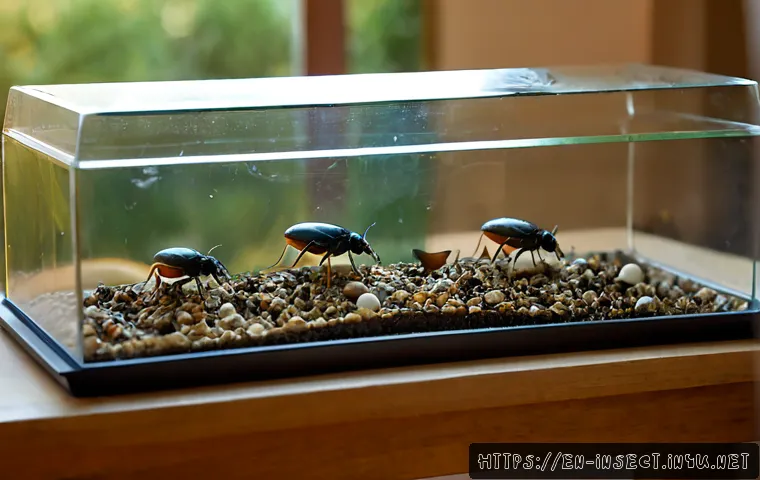
Most captive insect breeding failures come from a mismatch between the species’ needs and the enclosure conditions, not from one single “bad” product or mistake.
First verify species requirements, then stabilize the environment, and finally assess adult health, pairing, egg-laying conditions, and incubation as separate stages.
A larger enclosure, thermostat, hygrometer, or specialized substrate can be useful, but only when it addresses a confirmed gap in the setup. Changing temperature, humidity, food, lighting, and substrate at the same time usually makes troubleshooting harder.
A simple checklist can help you decide whether monitoring tools or breeding equipment are worth adding.
At a Glance
- Verify species-specific requirements for temperature, humidity, photoperiod, diet, substrate, and seasonal cues.
- Stabilize the enclosure before changing several variables or purchasing major breeding equipment.
- Assess mating, egg laying, and hatching separately, because each stage can fail for different reasons.
| Symptom | Likely Areas to Check | Low-Cost Check | Equipment Upgrade Worth Considering |
|---|---|---|---|
| No visible mating | Sex ratio, maturity, stress, temperature, light cycle, available space | Confirm sexing and adult maturity with a reliable species guide | Larger breeding enclosure, thermometer, hygrometer |
| Mating occurs but no eggs appear | Adult diet, hydration, egg-laying substrate, seasonal cues | Check whether the species needs a specific substrate depth or texture | Species-specific substrate, deeper container, care guide |
| Eggs become damaged, dry, or moldy | Moisture balance, airflow, handling, incubation conditions | Look for condensation, standing moisture, mold, or frequent disturbance | Ventilated incubation container, hygrometer, improved enclosure ventilation |
| Low hatch rate | Fertility, incubation climate, dehydration, mold, disturbance | Separate known facts from assumptions about fertility and egg age | Thermostat where stable temperature control is needed, incubation setup |
The Fastest Way to Diagnose a Breeding Problem
Separate mating, egg laying, and egg hatching into different stages
The first useful question is not simply, “Why will my insects not breed?” Ask which stage has stopped. Adults that do not mate may need different conditions from adults that mate but do not lay eggs. Eggs that are laid but fail to hatch create a third troubleshooting path. Do not assume that eggs are fertile, and do not assume that a pair is mature, healthy, or correctly sexed without checking species-specific information.
Check one environmental factor at a time before changing the setup
It is tempting to raise humidity, add heat, replace substrate, and alter the light schedule in one day. That can create more stress and makes it difficult to identify the real issue. Start by monitoring the existing enclosure with a basic thermometer and hygrometer. Then compare one observed condition at a time with reputable guidance for the exact species.
The three most common avoidable problems
Unstable climate, unsuitable egg-laying substrate, and an incorrect sex ratio are practical starting points. Many insects require specific temperature, humidity, photoperiod, or seasonal cues before mating or egg laying occurs. Overcrowding can also increase stress, injury, competition, and disease transmission, even when food appears plentiful.
Compare the Most Likely Causes Before Buying New Equipment
When a basic thermometer and hygrometer are enough
For many hobbyist setups, monitoring comes before automation. A thermometer and hygrometer can show whether the enclosure is fluctuating, overly dry, persistently wet, or prone to condensation. If conditions are already stable and within the species’ requirements, a more complex climate-control setup may not solve a problem caused by poor sexing, adult nutrition, or unsuitable substrate.
When a thermostat, larger enclosure, ventilation upgrade, or substrate may add value
A thermostat can be worth considering when a species is climate-sensitive and the enclosure temperature is not stable. A larger enclosure may help when crowding, injury, or competition is evident. Better airflow may be useful if moisture collects on surfaces or mold repeatedly develops. Species-specific substrate matters most for insects that need a particular depth, texture, or moisture level to lay eggs successfully.
Environmental Conditions That Commonly Block Reproduction
Temperature stability, day-night cycles, and seasonal cues
Many species respond to more than a warm enclosure. They may require an appropriate day-night cycle, a seasonal change, or a diapause or cooling period as part of the normal life cycle. Exact lighting, temperature, and cooling requirements vary substantially by species, so avoid copying settings from an unrelated insect.
Humidity, airflow, condensation, and mold control
Humidity is not just a number. Poor ventilation can contribute to excess condensation, mold growth, and unsuitable enclosure conditions. At the same time, eggs may be vulnerable to dehydration. Look for the physical signs inside the habitat: wet walls, stale air, visible mold, dry substrate, or eggs that are handled repeatedly. Balance moisture with airflow instead of treating either factor alone.
Space, hiding places, climbing surfaces, and disturbance reduction
Enclosure design should match the species’ behavior. Some insects benefit from hiding places, while climbing species may need suitable vertical surfaces. Repeated handling, frequent rearranging, and overcrowding can add stress. A breeding enclosure should make it easier to observe conditions without disturbing adults or eggs unnecessarily.
Care Mistakes That Affect Fertility, Egg Laying, and Hatch Rates
Incorrect adult diet or insufficient access to food and water
Adult insects may have different dietary needs from larvae. Inadequate adult nutrition can affect lifespan and reproductive activity, even if larvae were raised successfully. Confirm whether adults need different food, host material, feeder insects, or access to water than the juvenile stage.
Immature, injured, stressed, or incorrectly sexed adults

Breeding cannot be expected from adults that are not mature, compatible, healthy, or correctly sexed. These details are unknown until verified for the species and individual insects involved. Before purchasing additional equipment, check your identification method, sex ratio, colony density, and whether adults have adequate room to avoid constant contact.
Handling eggs too often or incubating them in unsuitable conditions
Hatch failure can result from infertile eggs, incorrect incubation conditions, dehydration, mold, or disturbance during development. If eggs are present, avoid treating them as proof that everything else is correct. Keep incubation decisions separate from adult enclosure decisions, and seek species-specific guidance before moving or changing the egg environment.
Troubleshooting by Insect Type and Breeding Goal
Beetles and insects that need deep egg-laying substrate
For beetles and similar insects, check whether adults need a particular substrate depth, texture, or moisture level for egg laying. A shallow or unsuitable substrate can prevent successful laying even when adults appear active. Choose substrate based on the species’ documented needs, not simply what is available.
Stick insects and mantises that need vertical space and low disturbance
Stick insects and mantises may require enclosure design that supports climbing, movement, and low disturbance. Vertical space and suitable surfaces can be important practical considerations. Avoid overcrowding, and confirm whether males and females should be housed together continuously for the species in question.
Moths, butterflies, and species that may need seasonal timing or host plants
Some moths, butterflies, and other species may depend on seasonal timing, diapause, cooling periods, or appropriate host plants. A warm enclosure alone may not reproduce the cues that trigger normal breeding activity. A reputable species-specific breeding guide is especially useful when life-cycle timing is involved.
Feeder-insect colonies where population density and sanitation matter
Feeder-insect colonies can decline when population density becomes too high or sanitation is neglected. Crowding may increase competition, injury, stress, and disease transmission. Watch for mold, damp conditions, limited access to food, and a colony size that no longer fits the enclosure.
Selection Criteria and Comparison Summary
Choose breeding supplies based on a confirmed need rather than a general promise of better hatch rates. Check species climate sensitivity, colony size, egg-laying behavior, airflow needs, and whether eggs require a separate incubation setup. A basic thermometer and hygrometer are useful when conditions are unknown; a thermostat is more relevant when temperature stability is the identified issue. Compare enclosures for usable space, ventilation, access for cleaning, and surfaces or substrate capacity suited to the species. Compare substrate by depth, texture, and moisture suitability, not by appearance alone. For breeding enclosure kits and specialist captive-breeding supplies, review the product details to confirm that the dimensions, ventilation, and components match the species’ actual requirements.
Conclusion
Successful insect breeding starts with separating the problem into stages: mating, egg laying, and hatching. Monitor the current setup before making broad changes, and avoid assuming that one piece of equipment will solve every issue. Stable conditions, appropriate space, suitable substrate, adult nutrition, and careful incubation all have different roles. When exact requirements are unclear, species-specific guidance is more useful than general advice.
Useful Things to Know
1. Condensation can indicate that airflow and moisture need review.
2. Adult care may not match larval care.
3. More insects in one enclosure does not necessarily improve breeding results.
4. Eggs can fail to hatch even when adults successfully mate.
5. A diapause or cooling period may be part of a species’ normal cycle.
Important Notes
Exact enclosure size, temperature, humidity, lighting, diet, sex ratio, substrate depth, and incubation method cannot be determined without identifying the species and life stage. Confirm recommendations through a reputable species-specific care guide or an experienced breeder familiar with that insect. Avoid changing multiple environmental variables at once, because this can increase stress and obscure the cause of failure.
Frequently Asked Questions
Q1. Why are my insects mating but not laying eggs?
A1. Possible causes include unsuitable egg-laying substrate, inadequate adult nutrition, incorrect moisture conditions, missing seasonal cues, or adults that are stressed or not fully mature. Check whether the species needs a particular substrate depth, texture, or moisture level before assuming the pair is infertile.
Q2. Do I need a thermostat and hygrometer for breeding insects at home?
A2. A hygrometer and thermometer are useful for confirming the actual enclosure conditions. A thermostat may be worth considering when temperature stability is important for the species and the current setup fluctuates. Monitoring tools do not replace species-specific care information.
Q3. Is it better to buy a complete breeding enclosure kit or build a setup myself?
A3. Either option can work if it provides the correct space, ventilation, climate monitoring, climbing surfaces, and substrate capacity for the species. A kit can be convenient, while a custom setup may be easier to adapt. Compare the enclosure features with verified species requirements before choosing.