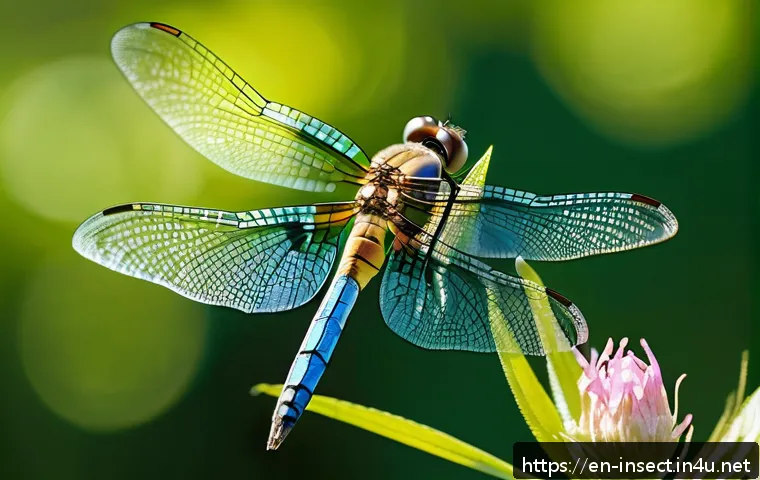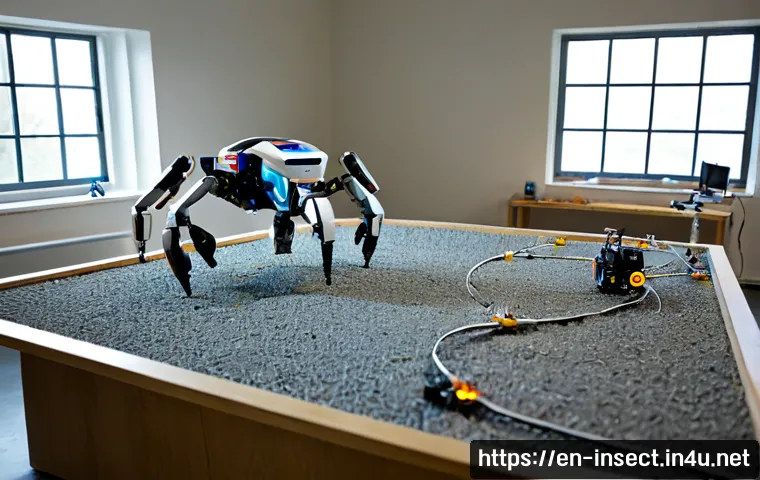
Insect-inspired robots can fly, crawl, climb, or navigate confined spaces using biological design principles. Review notable research cases, core components, practical limitations, and how to assess prototype costs and development options.
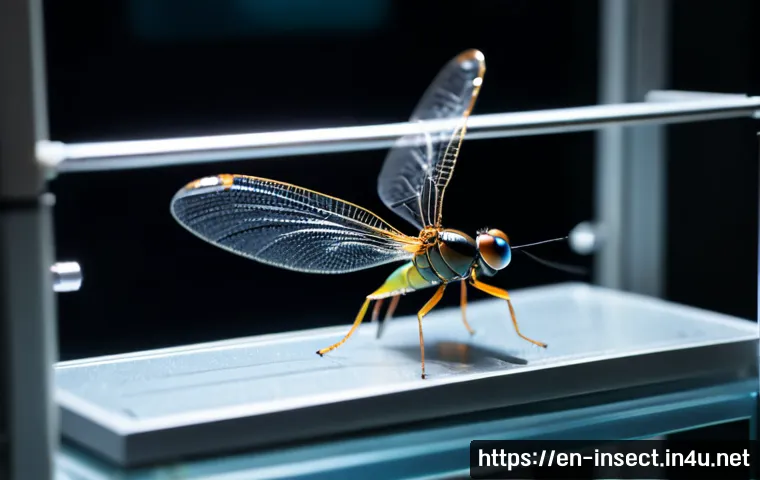
For university research, choose a flying insect-inspired platform when flapping-wing mobility itself is the question, a legged platform when terrain stability matters, and a cyborg-insect setup only for carefully reviewed sensing or movement experiments. For classrooms and early prototypes, ground-based systems are usually easier to inspect, tune, and test than insect-scale flight hardware. RoboBee shows why lightweight structures and piezoelectric actuators are central to insect-scale flight research, but it also highlights the tight limits on power and payload. Small robots can be attractive in confined or uneven environments, yet laboratory demonstrations should not be treated as proof of long-duration field performance. The right purchasing decision depends less on the insect shape and more on the required sensor package, control method, fabrication process, and test environment. Compare robotics kits, micro-actuators, sensors, simulation software, and prototyping support against those requirements before committing lab time.
At a Glance
- Flying designs support research into insect-scale flapping flight, but power, payload, communication, and control are major constraints.
- Legged and soft robots can be better starting points for uneven surfaces, contact-sensitive tasks, and repeatable lab demonstrations.
- Cyborg-insect research can combine living insect mobility with miniature electronics, but requires careful ethical, institutional, and regulatory review.
| Approach | Mobility Focus | Payload and Power Pressure | Control Complexity | Main Development Drivers |
|---|---|---|---|---|
| Flapping-wing micro air vehicle | Insect-scale flight | Very sensitive to battery mass, actuator efficiency, and added sensors | High | Lightweight structures, piezoelectric actuators, motion control, wireless links |
| Legged insect-inspired robot | Crawling across uneven terrain | More room for onboard components than many flying concepts | Moderate to high | Mechanical design, gait tuning, sensors, durability testing |
| Soft robotic platform | Flexible motion or gentle gripping | Depends on the actuation method and onboard electronics | Moderate | Flexible materials, fabrication methods, contact testing |
| Cyborg-insect system | Controlled movement or environmental sensing experiments | Miniature electronics must be kept lightweight | High | Backpack electronics, stimulation components, animal-welfare review, experimental controls |
What Insect-Inspired Robots Can Do—and Where They Still Fall Short
The Short Answer for Research, Education, and Prototype Teams
Insect-inspired robotics is most useful when a team needs to study small-scale mobility, compact sensing, lightweight actuation, or biologically informed movement. Flight platforms fit laboratories investigating flapping-wing dynamics and ultra-light mechanisms. Walking machines are often a stronger fit for mobility research, educational demonstrations, and early sensor experiments because the team can concentrate on locomotion without solving every problem involved in sustained flight. Soft robotic concepts are worth considering where flexible contact or gentle gripping is more important than rigid structural precision.
Why Small-Scale Mobility Is Attractive for Confined or Uneven Environments
Insects offer useful models for moving through cluttered spaces and across irregular surfaces. Cockroach-, ant-, beetle-, and stick-insect-inspired robots are commonly studied to improve stability on uneven terrain. Their value is not that they automatically solve field navigation; it is that they give engineers a starting point for exploring gait patterns, body geometry, contact sensing, and recovery from small disturbances. A prototype should be judged in the actual test environment, not only on a clean laboratory surface.
The Engineering Limits of Power, Payload, Control, and Durability
Micro air vehicles face a difficult trade-off: every added component can affect battery capacity, payload weight, wireless communication range, and actuator efficiency. A camera, sensor, radio, protective frame, or larger battery may improve one requirement while making flight control harder. Small systems also need careful motion-control tuning and can be vulnerable to dust, wind, moisture, impacts, and clutter. A successful indoor demonstration does not automatically establish reliable operation in rain, buildings, or long-duration missions.
Notable Research Directions in Small Bio-Inspired Robotics
RoboBee and Insect-Scale Flapping-Wing Flight
Harvard’s RoboBee research demonstrated insect-scale robotic flight using lightweight structures and piezoelectric actuators. The work has also explored concepts involving controlled landing, water interaction, and sensing-related functions beyond flight alone. For a research team, RoboBee is a useful reference point for the engineering discipline required at very small scales: structure, actuator behavior, control, power delivery, and sensing must be considered together rather than as separate add-ons.
Cyborg Insects with Onboard Control and Sensing Electronics
Cyborg-insect systems attach miniature electronics to living insects for controlled movement or environmental sensing experiments. The DragonflEye project demonstrated a system designed to guide dragonfly flight using a small backpack with electronics and optical stimulation components. This direction is distinct from building a fully robotic insect. It may reduce the need to reproduce biological flight mechanics, but it introduces serious requirements around animal welfare, privacy, institutional approvals, and local regulations.
Cockroach-, Ant-, and Beetle-Inspired Walking Machines
Legged robots based on crawling insects are often used to study stable movement over uneven terrain. A ground platform can provide more practical room for a microcontroller, battery, wireless module, and sensors than an insect-scale flying design. That does not make it simple: mechanical tolerances, leg coordination, traction, and gait tuning still consume substantial development time. However, it can be a sensible investment when the research question is terrain mobility rather than flight.
Soft Robotic Structures Based on Flexible Biological Movement
Soft robotics can mimic flexible insect body parts or gripping mechanisms. Flexible structures may reduce damage during contact with fragile surfaces, which can be valuable for controlled handling experiments. Teams should still validate repeatability, material durability, and sensor integration. “Soft” does not automatically mean robust, field-ready, or easier to manufacture.
Compare Flight, Crawling, and Cyborg Platforms Before Building
Comparison: Mobility, Payload, Runtime, Risk, and Lab Requirements
A flying system prioritizes airborne mobility but places the strongest pressure on mass and power. A crawling platform typically provides a more forgiving path for carrying sensors and testing wireless communication. Cyborg-insect work can use natural movement, yet its experimental design must account for oversight requirements that do not apply in the same way to a purely mechanical robot. Soft platforms may be appropriate when gentle interaction is the priority, although their fabrication and control approach can differ substantially from rigid micro-robotics.
When Flying Designs Justify Their Higher Control and Power Demands
Choose a flying design when the central research objective is flapping-wing flight, aerial maneuvering, lightweight actuation, or insect-scale airborne sensing. Start with a defined experiment rather than a broad vision of a general-purpose flying robot. Specify what must fly, what must be sensed, how commands will be transmitted, and what test conditions are realistic. This prevents a sensor list from expanding beyond what the power and structure can support.
When Ground-Based Micro-Robots Are the More Practical Investment
Choose a legged design when you need repeatable tests of locomotion, surface contact, obstacle response, or onboard electronics. It may also be the more accessible route for STEM education because students can observe mechanisms and adjust control parameters without the added challenge of maintaining flight. Compare robotics kits and micro-actuator options by required motion, available mounting space, control interface, and support for iterative repairs.
Prototype Planning: Components, Budget Drivers, and Development Choices
Actuators, Batteries, Sensors, Microcontrollers, and Wireless Links
Build the component plan around the intended task. List the actuator type, power source, sensing requirement, control board, and communication link before selecting a body shape. Battery mass and payload allowance should be checked early, especially for any airborne concept. Sensor selection should also match the experiment: adding sensing hardware without a clear data-use plan increases weight, integration work, and control complexity.
CAD, Simulation, Fabrication, and Test Equipment Requirements
CAD and robotics simulation software can help a team examine geometry, moving joints, and control assumptions before fabrication. Simulation is useful for narrowing options, but it cannot replace physical tests of actuator behavior, material flexibility, wireless performance, or contact with real terrain. Fabrication choices may include lightweight structural work, flexible materials for soft robotics, and integration of miniature electronics. Plan for a controlled test area as part of the prototype, not as an afterthought.
In-House Development Versus University Collaboration or Engineering Contractors
In-house development suits teams that need to learn through repeated design changes and have access to relevant mechanical, electronics, and control expertise. University collaboration can be appropriate when the work is research-led and requires specialized facilities or interdisciplinary supervision. Engineering prototyping services may help when a team needs fabrication or integration support, but the project scope should clearly state performance targets, test conditions, ownership expectations, and review milestones. Availability, reliability, and final pricing vary by supplier and configuration, so obtain current specifications directly from each provider.
Common Research Mistakes and Responsible Testing Practices
Designing Around a Target Payload Before Choosing the Power System
A common mistake is selecting sensors, communication hardware, and protective features first, then trying to make the power system fit afterward. Reverse that process. Define the mobility objective, estimate the component set, and assess the power and mass constraints before finalizing the enclosure or body. This is especially important for flapping-wing systems, where small additions can change the whole control problem.
Avoiding Unrealistic Lab-to-Field Performance Assumptions
Do not turn a concept demonstration into a claim about inspection, search-and-rescue, surveillance, or medical deployment without validated field testing. Wind, dust, rain, building clutter, extended operation, and communication interruptions can change performance significantly. State what was tested, under which conditions, and what remains unknown.
Handling Animal Welfare, Privacy, and Institutional Review Considerations
Cyborg-insect research needs more than technical planning. Requirements concerning animal welfare, privacy, and regulatory compliance depend on the institution and jurisdiction. Research teams should confirm applicable review processes before experiments begin and should not assume that a technical prototype alone establishes acceptable use.
Selection Criteria and Comparison Summary
Before choosing hardware or outside support, check these decision points:
- Primary mobility goal: flight, crawling, flexible contact, or controlled insect movement.
- Payload discipline: identify every sensor, battery, processor, and wireless component that must be carried.
- Control workload: allow time for actuator calibration, motion-control tuning, and test iteration.
- Test setting: separate indoor proof-of-concept goals from claims about field conditions.
- Build path: compare robotics kits, sensors, CAD and simulation tools, and engineering prototyping services against the actual experiment.
- Oversight needs: confirm institutional and local requirements before pursuing cyborg-insect experiments.
When comparing vendors or development partners, check the relevant product or service page for current technical specifications, research-use conditions, integration support, and configuration options.
Closing Thoughts
Insect-inspired robot research is most productive when the biological inspiration serves a specific engineering question. A flapping-wing robot, legged machine, soft mechanism, and cyborg-insect platform each solve different experimental problems. Start with the required movement and measurement, then work backward to power, control, fabrication, and testing. That approach makes component selection more disciplined and prevents ambitious concepts from outrunning practical prototype limits.
Useful Things to Know
RoboBee is a landmark example of insect-scale flight research using lightweight structures and piezoelectric actuators. Legged insect-inspired robots are commonly used to study stability across uneven terrain. Soft robotics can be useful where flexible movement or reduced contact damage matters. Cyborg-insect systems are a separate research category that combines living insects with miniature electronics.
Important Considerations
Specific platform price, availability, and reliability must be confirmed with the supplier or research provider. Laboratory results may not predict performance in wind, rain, dust, clutter, or extended missions. Any cyborg-insect project should be reviewed for applicable animal-welfare, privacy, institutional, and jurisdictional requirements. Claims involving operational deployment should be based on validated field testing rather than concept demonstrations.
Frequently Asked Questions
Q1. What is the best insect-inspired robot type for a university research project?
A1. It depends on the research question. A flapping-wing platform fits insect-scale flight and lightweight actuator research. A legged robot is often more practical for terrain mobility, control, and sensor experiments. Soft robotics may fit flexible-contact studies, while cyborg-insect systems require additional ethical and institutional consideration.
Q2. How much does it cost to build an insect-scale robot prototype?
A2. There is no single reliable figure. Cost depends on the chosen actuators, batteries, sensors, microcontrollers, wireless hardware, fabrication method, simulation tools, test equipment, and whether outside engineering support is used. Request current specifications and quotes for the exact research configuration.
Q3. Are cyborg insects and insect-inspired robots safe and ethical to use in research?
A3. A mechanical insect-inspired robot and a cyborg-insect system raise different considerations. Cyborg-insect research may involve animal-welfare, privacy, and regulatory requirements that vary by institution and jurisdiction. Safety and ethical suitability should be evaluated through the applicable review process and the intended testing conditions.